Q2 Estimated Taxes Are Due June 15, 2026: How Quarterly Payments Work
The second-quarter 2026 federal estimated tax payment is due June 15. Here is how quarterly payments work, who owes them, the safe-harbor rule, and how self-employment tax is figured — with the real numbers.
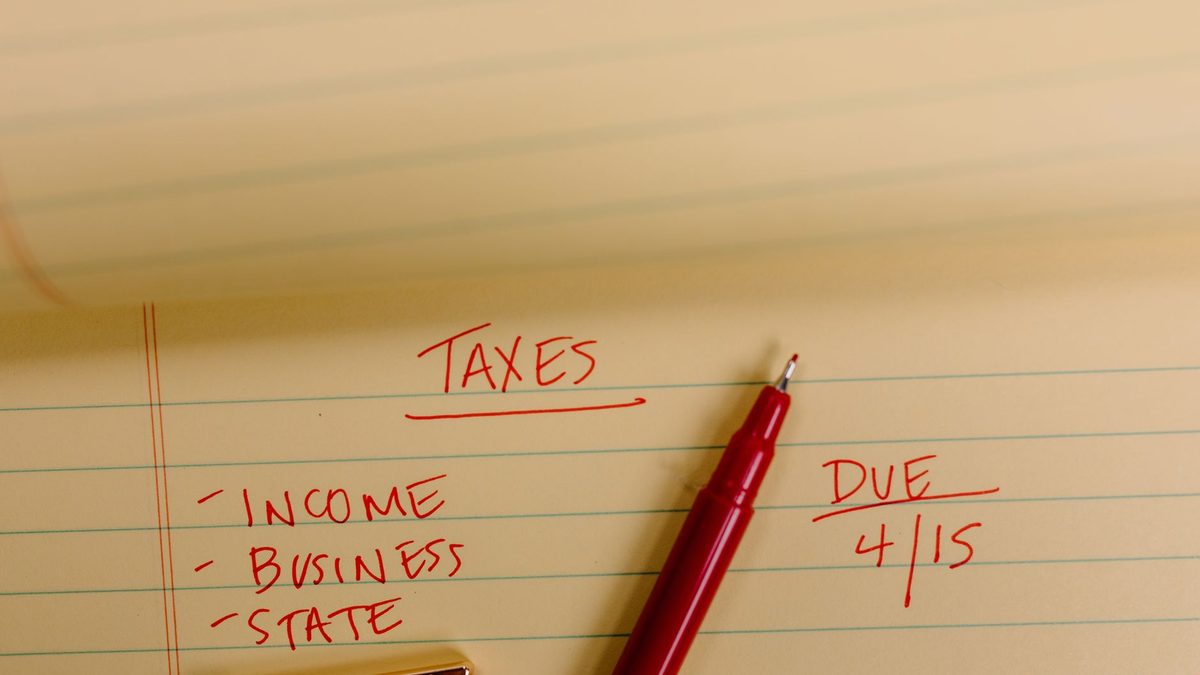
Written with AI assistance; every figure is checked against our calculators and primary sources, and reviewed by Ethan Ginsberg before publishing.
The bottom line
A freelancer with $80,000 of net profit owes about $11,304 in self-employment tax for 2026 — on top of income tax — and pays it across four estimated installments.
Q2 Estimated Taxes Are Due June 15, 2026: How Quarterly Payments Work
The second-quarter 2026 federal estimated tax payment is due Monday, June 15, 2026. It covers income earned from April 1 through May 31, 2026 — a two-month "quarter." Estimated taxes are the federal government's pay-as-you-go method for income that has no withholding, such as self-employment, freelance, investment, and rental income. The IRS figures and collects them on Form 1040-ES.
Who owes estimated taxes?
The IRS generally expects estimated payments from anyone who will owe $1,000 or more in tax for the year after subtracting withholding and refundable credits. That commonly includes independent contractors, gig and freelance workers, sole proprietors, partners, S-corporation shareholders, and people with significant income from investments, dividends, or rent.
Wage earners are usually covered by paycheck withholding instead. Because withholding is treated as paid evenly across the year regardless of when it occurs, increasing withholding on a W-2 (by filing a new Form W-4) is the mechanism employees use in place of quarterly vouchers.
The 2026 due dates
Estimated tax "quarters" are not equal calendar quarters. The 2026 federal schedule:
| Period | Income earned | Payment due |
|---|---|---|
| 1st | Jan 1 – Mar 31, 2026 | April 15, 2026 |
| 2nd | Apr 1 – May 31, 2026 | June 15, 2026 |
| 3rd | Jun 1 – Aug 31, 2026 | September 15, 2026 |
| 4th | Sep 1 – Dec 31, 2026 | January 15, 2027 |
When a due date falls on a weekend or legal holiday, it moves to the next business day. June 15, 2026 is a Monday, so the second-quarter deadline is not shifted.
How much to send: the safe-harbor rule
A payment is "enough" when it clears the IRS underpayment safe harbor. The safe harbor is met by paying, over the course of the year, the smaller of:
- 90% of the total tax shown on the 2026 return, or
- 100% of the total tax shown on the 2025 return.
The prior-year test rises to 110% of the 2025 tax for taxpayers whose 2025 adjusted gross income was more than $150,000. Meeting either threshold avoids the underpayment penalty even if the final bill turns out higher. The underpayment penalty itself functions like interest charged on the shortfall for the period it went unpaid.
Self-employment tax, the number freelancers miss
For self-employed people, the estimated payment has to cover income tax and self-employment (SE) tax. SE tax funds Social Security and Medicare for workers who have no employer withholding those amounts.
The SE tax rate is 15.3% — a 12.4% Social Security portion plus a 2.9% Medicare portion — applied to 92.35% of net self-employment earnings. The Social Security portion applies only up to an annual wage-base limit; the Medicare portion has no cap, and an additional 0.9% Medicare tax applies to earnings above set thresholds (for example, $200,000 for a single filer).
Worked example, $80,000 of net self-employment profit (below the Social Security wage base):
- Taxable base: 92.35% × $80,000 = $73,880
- SE tax: 15.3% × $73,880 = about $11,304 for the year
That $11,304 is on top of any income tax. Spread across four installments, the SE-tax portion alone is roughly $2,826 per payment. One useful offset: half of the SE tax (about $5,652 in this example) is an above-the-line deduction that reduces income subject to income tax — though not the SE tax itself.
Ways to pay
The IRS and the U.S. Treasury accept estimated payments through several free or low-cost channels:
- IRS Direct Pay — directly from a checking or savings account, with no fee.
- EFTPS — the Electronic Federal Tax Payment System, a free U.S. Treasury service that also schedules payments in advance.
- By mail — a check with the Form 1040-ES payment voucher.
- Debit or credit card — processed by third-party providers that charge a fee.
A free way to size a quarter is to estimate the full-year tax first, then divide. The Money Scale Tax Return Estimator gives a rough federal and state figure from wages, self-employment income, and withholding; one quarter of the projected annual tax is a common starting point for an even four-payment plan.
The short version
The second-quarter 2026 federal estimated tax is due June 15, 2026, on income earned April 1 through May 31. It applies to people expecting to owe at least $1,000 after withholding, it is figured on Form 1040-ES, and paying the smaller of 90% of this year's tax or 100% of last year's (110% above $150,000 of prior-year AGI) clears the underpayment safe harbor. For the self-employed, the payment also carries the 15.3% self-employment tax on 92.35% of net earnings — about $11,304 a year on $80,000 of profit.
Educational information, not tax advice. Figures reflect federal rules as of the last-reviewed date; state estimated-tax rules and deadlines differ. The IRS and a qualified tax professional are the authoritative sources for an individual situation.
Run your numbers
Plug your own figures into the Tax Return Estimator calculator and see your specific outcome.
Open Tax Return EstimatorSources
Related reads
How Money Market Fund Yields Work After the June 2026 Fed Meeting
A plain-English look at what a money market fund is, how its yield tracks the federal funds rate, and why those yields stayed near current levels after the Fed held rates on June 17, 2026.
Read itFAFSA Deadline Is June 30: Federal vs. State Aid Deadlines
The 2025-26 FAFSA federal deadline lands at 11:59 p.m. Central on June 30, 2026. Here's how it differs from state and college cutoffs.
Read itHow to Read the June 2026 Jobs Report: Payrolls, Unemployment, Wages
A plain-English guide to the four headline numbers in the BLS Employment Situation report and how labor data ripples to Fed expectations, savings yields, and mortgage rates.
Read itMid-Year 2026 Paycheck Checkup: Is Your Tax Withholding on Track?
How federal withholding works, why June is the natural time to check it, and how to use the free IRS Tax Withholding Estimator for 2026.
Read it
Money Scale Weekly
Read another one like this on Thursday?
We send one short, sourced money read per week. Tied to taxes and the other Money Scale pillars. Free, no spam, one click to unsubscribe.
Drop your email and you're in. We send one short read on Thursday — and nothing else without your asking.
Money Scale is free to read and free to use — no paywall, no account, no selling your data. Hosting and research still cost money, so if this was worth your time you're welcome to buy us a coffee. Never required.